12-Week Year Templates: The Ultimate Guide to the Best Templates 2026

A curated review of the most complete 12-Week Year templates — free and paid, for 2026.

Updated: 2 January, 2026     •    by Dan Mintz

12-Week Year Templates: The ultimate 2026 guide

Templates Examined | Best of 2026

The 12-Week Year company has its own app / template.


But…it is soooo expensive and soooo outdated.  Therefore, I have decided to dive into exploring and researching the best alternative templates for 2026.  The 12-Week Year is considered one of the top personal productivity systems, and finding an effective template or app is definitely worth the effort.


What makes a great template for the 12-Week Year?

  • Adheres to the system pillars – the 12-Week Year has key pillars such as vision, goals, execution, and scorekeeping that for a template to be great, it must support these pillars
  • Helps you achieve your most important goals – a great productivity system is measured by its ability to help you achieve your most important goals.  A great template should be held to this standard.  
  • It is deep and robust – for instance: there’s a strong scorekeeping functionality that enables performance assessment on a weekly basis.
 

Get  the  12-Week  Year  template  used by our team

Best 12-Week Year Templates for 2026

Our top recommendations to help you and your team.

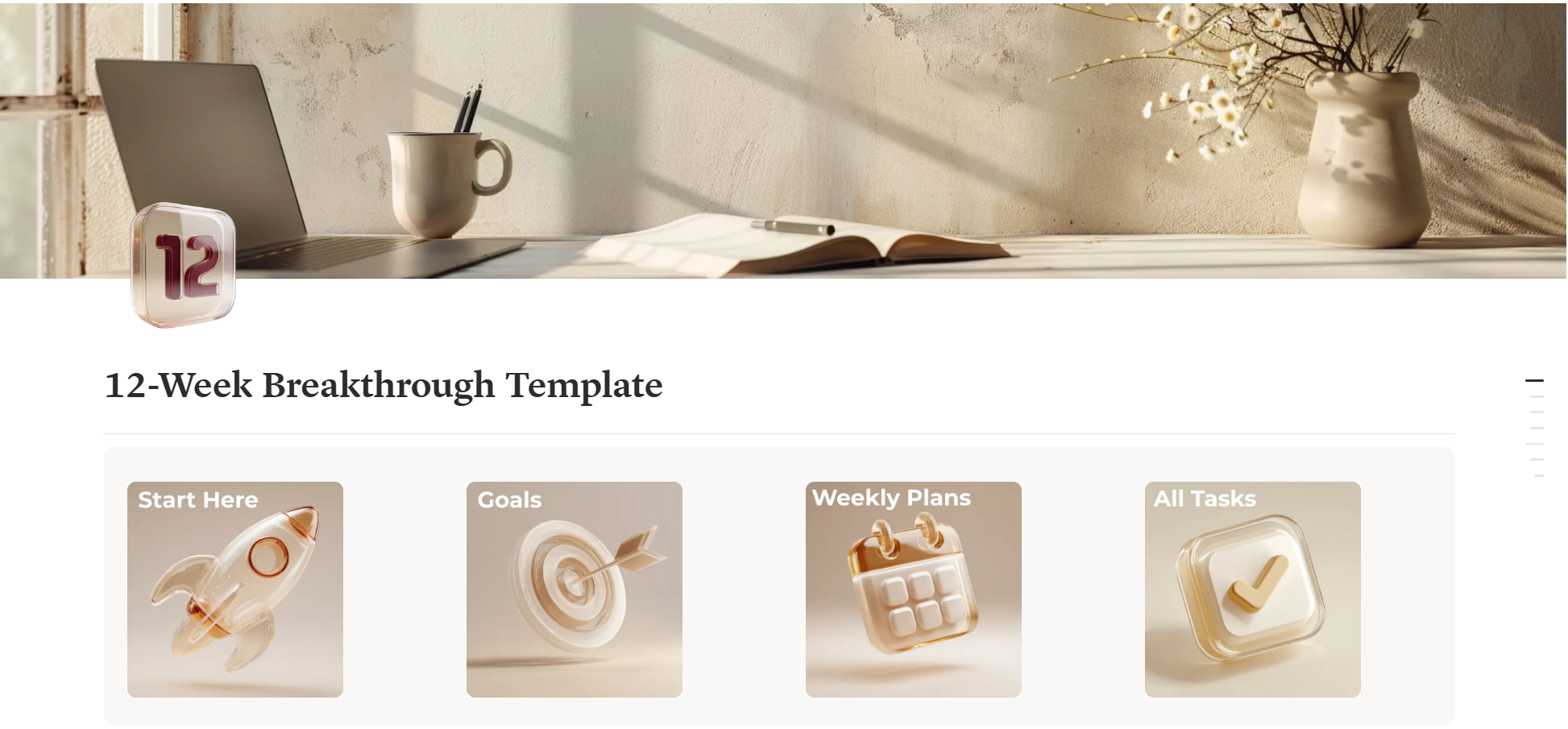
1: The 12-Week Breakthrough Template

Platform: Notion 

Creator: Dan Mintz, The 12-Week Breakthrough 

Price: Free (for now)

Quick Verdict: The best most robust template out there, and most loyal to the source

  • This is the most faithful 12-Week Year template currently available in Notion.
  • Unlike many templates that loosely reference the methodology, this system closely follows the original 12-Week Year structure — 12-week goals, weekly planning, execution discipline, and scorekeeping. The strength of this template is its robustness: it doesn’t just organize tasks, it actively supports executing the 12-Week Year as intended.
  • The structure is opinionated and execution-focused, trading flexibility for clarity and consistency. It’s not designed to be a general productivity dashboard, but a dedicated 12-Week Year operating system.
  • For readers looking for a template that stays true to the source and enforces real execution, this is the strongest option on the list.

the best 12 week year template

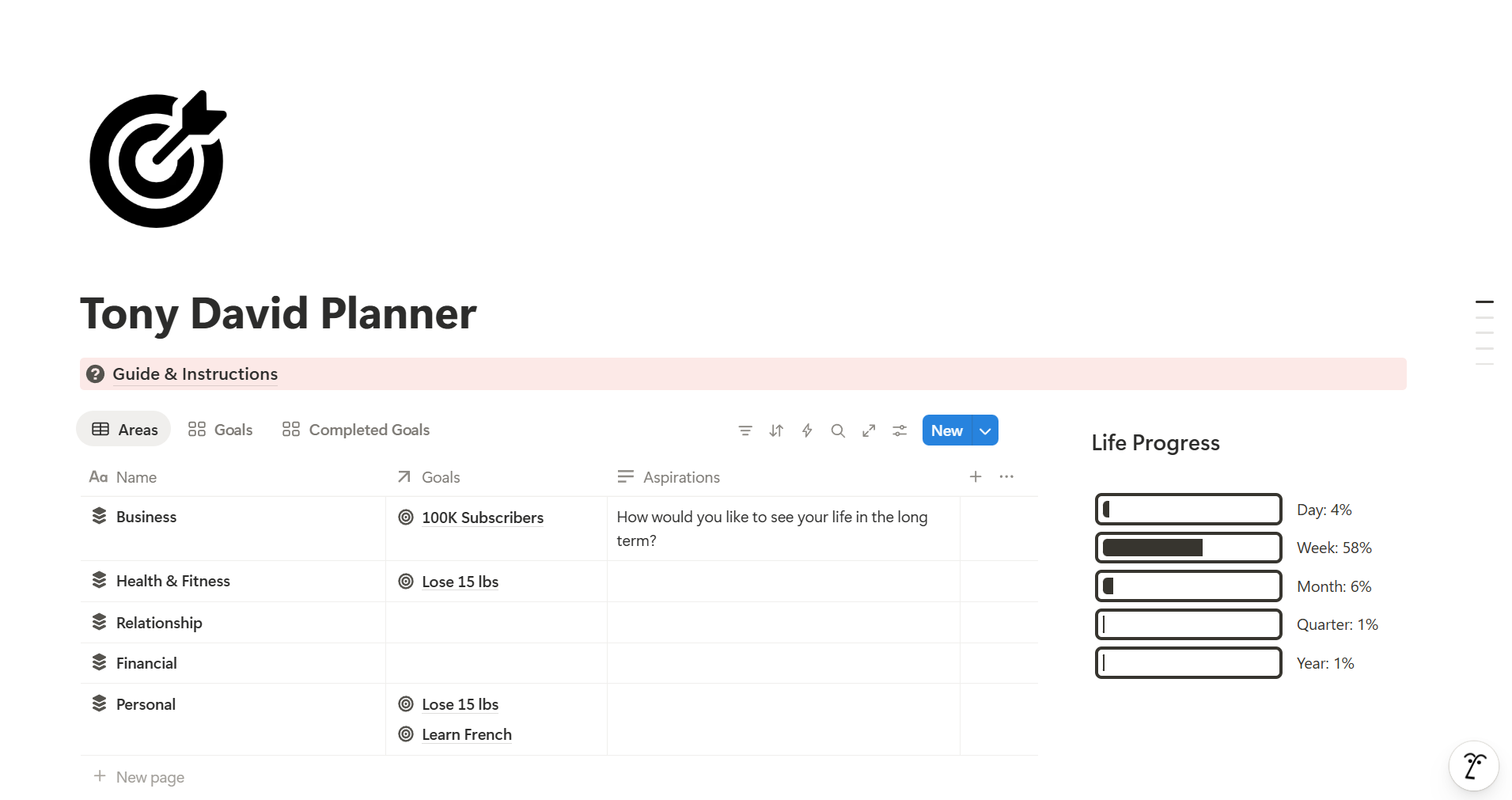
2: Tony David 12-Week Year Notion Template

Platform: Notion 

Creator: Tony David (A notion template creator)

Price: Free (donation an option)

Quick Verdict: The second best option, but has not been updated for a long time.

  • The Tony David 12-Week Year Notion Template has been one of the most popular and widely shared 12-Week Year templates for several years.
  • It follows the core structure of the original 12-Week Year reasonably well, covering areas like goal setting, weekly planning, and basic execution tracking. Its simplicity made it approachable and helped it gain traction early on, especially among users looking for a free and lightweight starting point.
  • However, the template has not been meaningfully updated in a long time, and this shows in its depth. While it aligns with the source methodology at a high level, it lacks the robustness needed for sustained execution. In particular, scorekeeping and weekly performance tracking are relatively shallow compared to more modern implementations.
  • Overall, this template remains a solid and familiar option, especially for newcomers. But compared to newer systems, it feels dated and less equipped to support consistent, high-quality 12-Week Year execution over time.


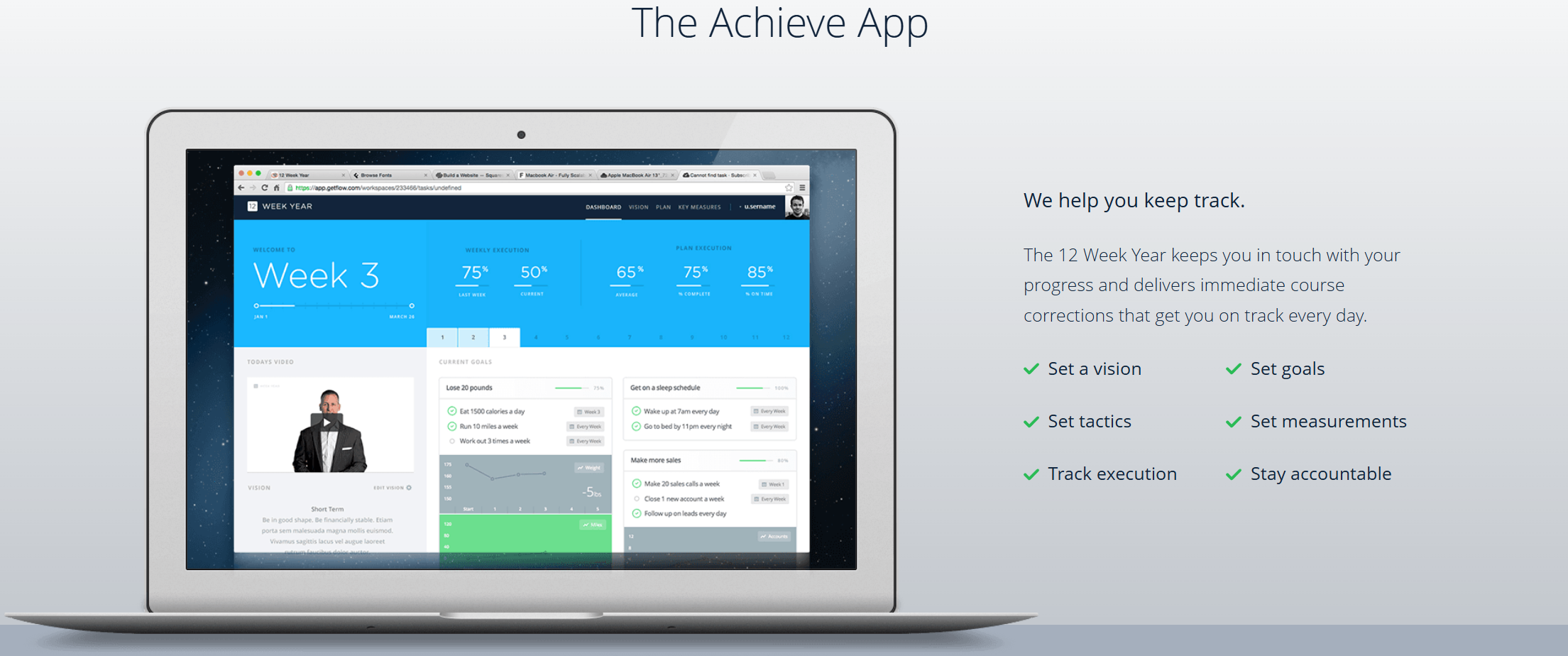
3: The Achieve! App by 12-Week Year

Platform: Web-based Application

Creator: The 12-Week Year Company

Price: $695 annual subscription

Quick Verdict: Achieve! is the official software of the 12 Week Year. Outdated, expensive, a closed system.

  • The Achieve app is the official 12-Week Year application, created by the original source of the methodology.
  • As expected, it is fully aligned with the 12-Week Year framework and reflects the system as it was originally taught. In theory, this makes it the most loyal implementation available, with built-in structures for goals, weekly execution, and accountability.
  • In practice, however, the app has not been meaningfully updated for years. The interface feels dated, functionality is limited, and development appears largely stagnant. Because it operates as a closed, proprietary app, users have little flexibility to adapt or extend the system to their own workflows.
  • Additionally, the app has become prohibitively expensive relative to its value, especially when compared to modern, flexible tools like Notion-based systems. As a result, it has steadily declined in popularity and adoption.
  • While Achieve remains conceptually faithful to the source, it no longer represents a practical or competitive option for most people looking to implement the 12-Week Year today.

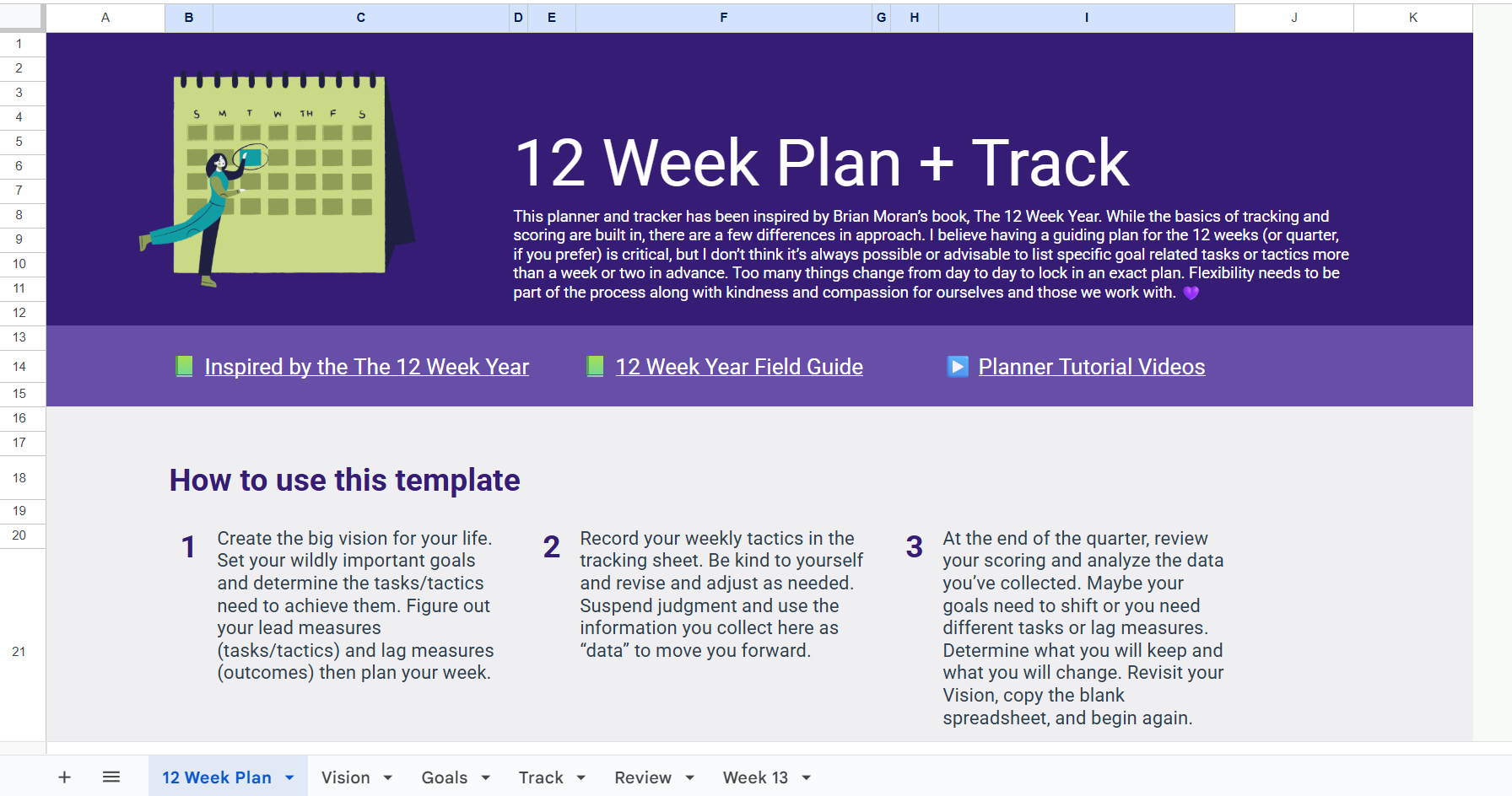
4: Mindful Marks 12-Week Year Template

Platform: Google Sheets

Creator: MindfulMarks.com

Price: $27

Quick Verdict: An effective yet simple Google Sheet template that is aligned with the 12-Week Year system, but lacks depth and robustness.

  • The Mindful Marks 12-Week Year Template is a simple and accessible implementation of the 12-Week Year system built in Google Sheets.
  • It follows the core principles of the methodology, including 12-week goals, weekly planning, and basic execution tracking. The spreadsheet format makes it easy to understand and quick to start, especially for users already comfortable working in Google Sheets.
  • However, the simplicity comes with clear limitations. The template lacks depth, automation, and structural robustness, making it harder to maintain consistency over longer cycles. Scorekeeping and progress tracking are relatively basic, and the system relies heavily on manual input without much guidance.
  • Overall, this template works well as a lightweight introduction to the 12-Week Year, but it falls short for users looking for a more comprehensive or scalable execution system.

5: xTiles 12-Week Year Template / App

Platform: xTiles

Creator: xTiles

Price: $6.95 / Month (there’s a limited free option)

Quick Verdict: A very good template, visually designed.  It is a closed system – you must use their platform which is relatively unknown.

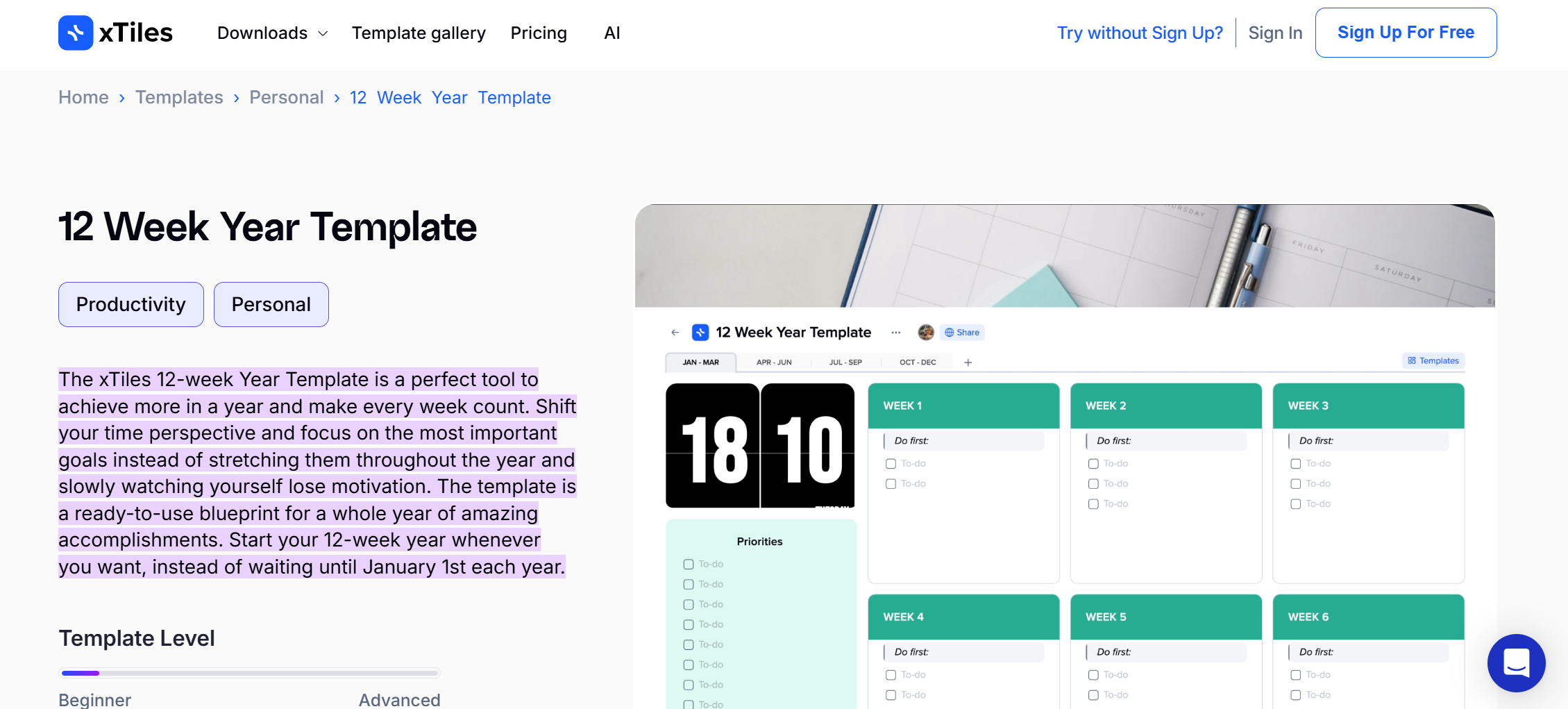
  • The xTiles 12-Week Year Template is a visually polished adaptation of the 12-Week Year framework built within the xTiles platform.
  • It incorporates the core ideas of the methodology, such as 12-week goals and short execution cycles, and presents them in a clean, card-based layout. The visual-first approach makes the template appealing and easy to navigate, particularly for users who prioritize aesthetics.
  • That said, the template is less rigorous in execution. It departs from the original system in key areas, with limited support for structured weekly planning and scorekeeping. Because it runs inside the closed xTiles environment, flexibility and customization are also constrained compared to Notion-based solutions.
  • Overall, this template is a good visual introduction to the 12-Week Year concept, but it lacks the depth and robustness needed to fully support consistent execution of the methodology.

Get  the  12-Week  Year  template  used by our team

Frequently Asked Questions: Best 12-Week Year Templates (2026 Guide)

General System Overview

What is the 12-Week Year system?

The 12-Week Year is a high-performance productivity framework created by Brian Moran and Michael Lennington. It redefines a “year” as 12 weeks, eliminating the year-end “push” and replacing it with a consistent sense of urgency. The system relies on five disciplines: vision, planning, process control, measurement, and time use.

What features should I look for in a 12-Week Year template?

A high-quality template for 2026 should offer more than just a task list. To be effective, look for:

  • Pillar Support: Integrated sections for long-term vision and 12-week goals.

  • Automated Scorekeeping: A way to calculate your execution percentage weekly.

  • Weekly Planning: A dedicated space to translate goals into daily tactics.

  • Platform Flexibility: Compatibility with modern tools like Notion or Google Sheets.


2026 Template Comparisons

What is the best free 12-Week Year template in 2026?

Currently, The 12-Week Breakthrough Template by Dan Mintz is the top-rated free option. It is built on Notion and is widely considered the most faithful to the original methodology. It prioritizes “execution discipline” and “scorekeeping” over general aesthetic dashboarding.

Is the official “Achieve!” app worth the subscription?

For most users in 2026, the answer is no. While it is the official software from the 12-Week Year company, it is currently priced at $695 annually. Users often find the interface outdated, the system closed to customization, and the price-to-value ratio significantly lower than modern Notion-based alternatives.

How do the top 12-Week Year templates compare?

Template / AppPlatformPriceBest For
12-Week BreakthroughNotionFreeBest overall; faithful to source
Tony David TemplateNotionFree / DonationBeginners; simple & lightweight
Achieve! AppWeb$695/yrOfficial purists (but outdated)
Mindful MarksGoogle Sheets$27Spreadsheet lovers
xTiles TemplatexTiles$6.95/moVisual learners

Platforms & Technical Questions

Can I run the 12-Week Year on Notion?

Yes. Notion is arguably the most popular platform for this system in 2026. Templates like the 12-Week Breakthrough and Tony David’s version leverage Notion’s databases to automate scorekeeping and link daily habits to 12-week objectives.

Is there a Google Sheets alternative for the 12-Week Year?

The Mindful Marks Template is the leading Google Sheets option. While it lacks the automation of Notion, it is ideal for those who prefer a linear, spreadsheet-based approach to tracking metrics and tactics.

What is the “Scorekeeping” pillar, and why does my template need it?

Scorekeeping is the most critical part of the 12-Week Year. It measures your execution, not your results. A great template should calculate the percentage of planned tactics you completed each week. If you complete 85% or more, you are statistically likely to achieve your goals.

Note: Many “light” templates omit scorekeeping, which turns the system into a basic “to-do list” rather than a high-performance operating system.


Troubleshooting & Selection

Why are some templates described as “Outdated”?

In the context of 2026, templates like the Tony David Notion Template or the Achieve! App are considered outdated because they haven’t been updated to utilize modern UI/UX improvements or the latest Notion features (like formulas 2.0 or advanced database buttons). This can make them feel clunky or manual compared to newer “Breakthrough” systems.

I’m new to the system. Which one should I start with?

If you want a balance of simplicity and effectiveness, Tony David’s Notion Template is a classic starting point. However, if you are serious about achieving results immediately, the 12-Week Breakthrough is recommended because it “enforces” the rules of the system more strictly.


12-Week Breakthrough

Acheive Peak
Productivity For Life
In 12 Weeks