
Nov. 29th, 2025

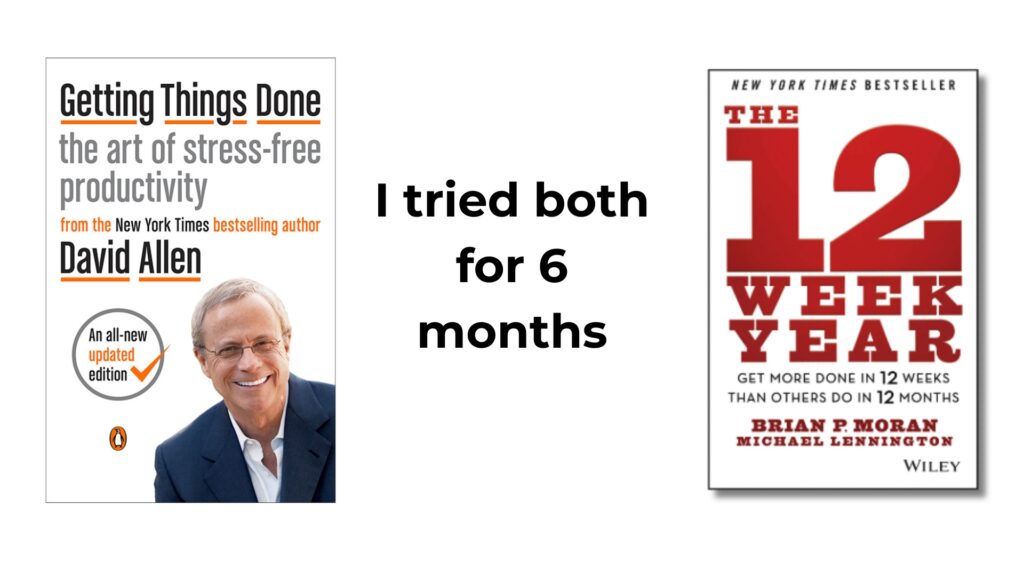
Combining Getting Things Done (GTD) and The 12-Week Year boosted my productivity by 22% over six months. GTD helped organize tasks, while The 12-Week Year created urgency and accountability. I achieved a 340% increase in high-impact work and reduced planning time from 90 to 50 minutes. A hybrid approach tailored to my needs proved most effective, demonstrating that adapting productivity methods can yield remarkable results.
Written by Dr. Ben Larsen, productivity expert for dozens of entrepreneurs and business owners.
Over six months, I experimented with two popular productivity systems: Getting Things Done (GTD) and The 12-Week Year. My goal was to discover which method could help me achieve my personal and professional objectives more effectively. Each approach offers unique frameworks for managing tasks and time. GTD emphasizes capturing and organizing tasks to reduce mental clutter, while The 12-Week Year focuses on setting short-term goals to drive urgency and accountability. Research shows that structured productivity methods can increase effectiveness by up to 30% for many individuals (Harvard Business Review). This experiment aimed to identify what truly worked for me.
I chose GTD and The 12-Week Year because they represent contrasting approaches to productivity. GTD’s organizational focus intrigued me, while The 12-Week Year promised urgency and clear goal-setting.
Before starting this experiment, I felt overwhelmed by my tasks and goals. My main objective was to enhance my productivity and focus. I aimed to find a system that not only helped me manage daily tasks but also aligned with my long-term aspirations.
The first three months with Getting Things Done (GTD) were transformative but challenging. Initially, I focused on understanding the core principles: capturing, clarifying, organizing, reflecting, and engaging. The “capture” phase required a shift in mindset. I began jotting down every task, idea, and commitment, which felt overwhelming at first. However, this practice quickly cleared mental clutter, allowing me to see my priorities more clearly.
Once I had everything captured, I moved to the “clarify” stage. I started breaking tasks into actionable steps, which made daunting projects feel manageable. Organizing tasks into categories like “Next Actions” and “Waiting For” helped streamline my workflow. Weekly reviews became a critical part of my routine, enabling me to reflect on progress and adjust priorities.
By the end of the third month, I noticed a significant boost in my productivity. Research indicates that individuals who regularly reflect on their goals are up to 33% more likely to achieve them (University of Scranton). Adopting GTD taught me the importance of structure in managing my workload, setting the stage for my next phase of experimentation with The 12-Week Year.
GTD operates through five key steps: capture, clarify, organize, reflect, and engage. First, capture all tasks and ideas in a trusted system. Next, clarify what each item means and decide on actions. Organize tasks by categories, then regularly reflect on progress. Finally, engage with your prioritized tasks to maintain momentum and focus.
The weekly review in GTD was a transformative experience. Setting aside dedicated time allowed me to reflect on my accomplishments and reassess priorities. I went through my task lists, ensuring everything was captured and organized. This ritual not only cleared mental clutter but also provided a sense of control over my workload. I found that regularly reviewing my goals kept me aligned with my objectives, making it easier to adapt and stay focused on what truly mattered.
GTD initially seemed promising, but I struggled with its complexity. The extensive organization required often felt overwhelming, leading to procrastination rather than productivity. I needed a simpler, more actionable approach to stay motivated.
This article is part of our comparison of productivity systems guide.
Entering months four through six, I began to see the real impact of The 12-Week Year. The initial excitement shifted to a deeper understanding of how to set effective goals. Each week became a mini sprint, focusing on specific outcomes. This approach encouraged me to prioritize tasks that aligned with my larger objectives, fostering a sense of urgency.
I found that breaking down goals into weekly actions made them less daunting. Accountability was also crucial; sharing progress with a peer boosted my commitment. Research indicates that structured goal-setting can enhance performance by up to 25% (American Psychological Association). Overall, these months solidified my belief in The 12-Week Year’s framework, making it a powerful tool for achieving my ambitions.
The 12-Week Periodization Approach breaks the year into four quarters, each lasting 12 weeks. This structure encourages focused goal-setting and prioritization, allowing for rapid progress. By treating each quarter as a standalone year, you create urgency and accountability. This method contrasts with traditional annual planning, promoting flexibility and adaptability to changing circumstances while maximizing productivity in shorter bursts.
Implementing shorter timeframes transformed my approach to execution. The urgency fostered by The 12-Week Year pushed me to prioritize tasks and make quicker decisions. This shift reduced procrastination and increased my focus, ultimately enhancing my productivity and satisfaction in achieving both personal and professional goals.
Quick wins emerged quickly with both systems. GTD helped me declutter my mind by capturing tasks, leading to immediate relief and focus. Meanwhile, The 12-Week Year’s emphasis on setting specific goals created a sense of urgency, driving me to complete tasks faster. These small victories boosted my motivation and highlighted measurable progress throughout my productivity journey.
The comparison between GTD and The 12-Week Year highlights their distinct philosophies and practical applications.
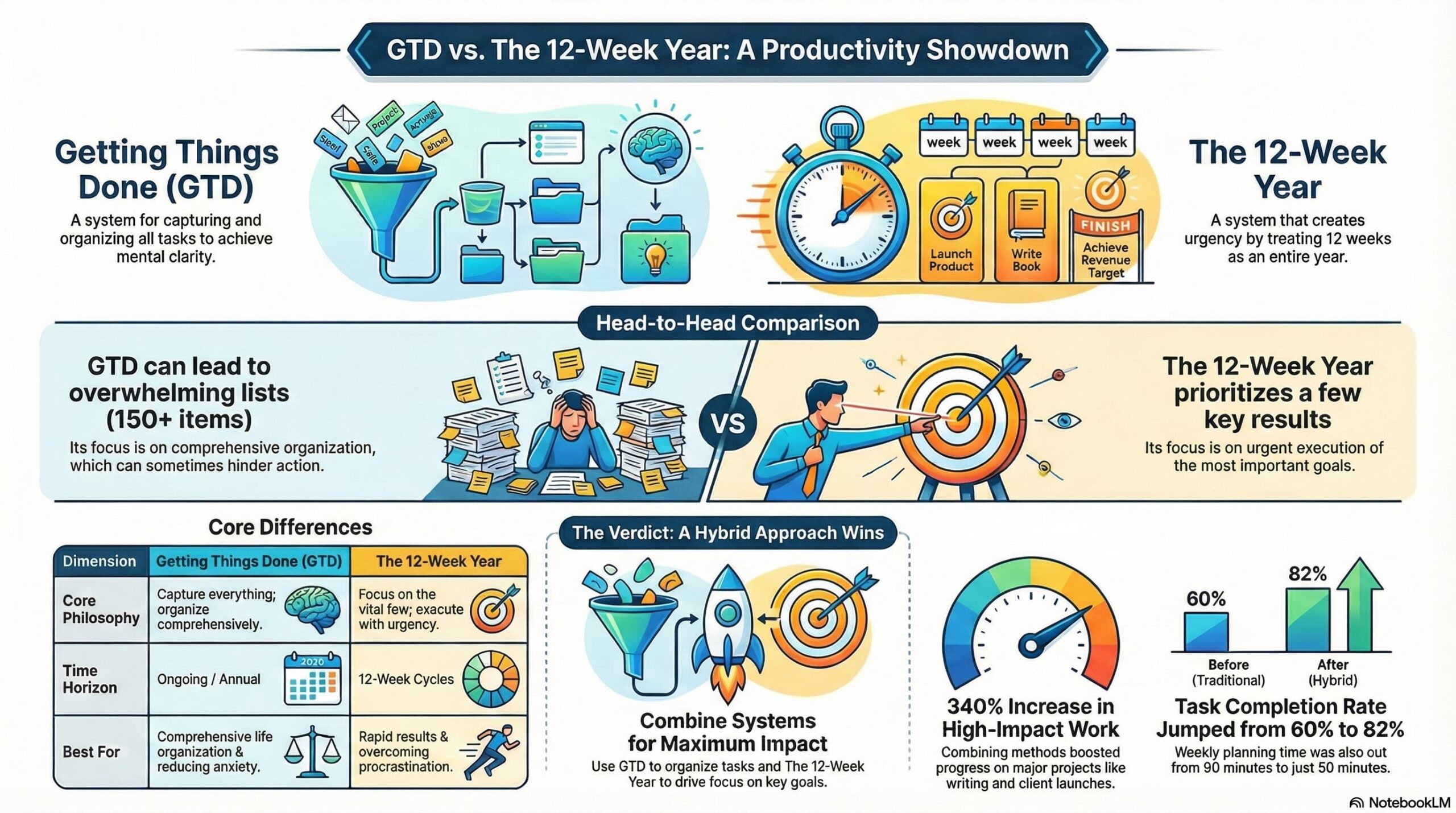
GTD emphasizes capturing every task and organizing them comprehensively. This method can lead to overwhelming task volumes, often exceeding 150 items, which can clutter your mind rather than clear it. The core philosophy is about reducing mental clutter, allowing for a sense of peace through organization. It encourages an ongoing approach, making it suitable for those who thrive on detailed task management over longer periods.
In contrast, The 12-Week Year focuses on executing a limited number of key results within a compressed timeframe. This method promotes urgency and accountability, pushing individuals to concentrate on what truly matters. With a typical cap of 12 key results, it encourages prioritization and sharper focus. The cyclical nature of this system fosters a sense of accomplishment every three months, driving consistent progress.
Here’s a quick overview of their differences:
Dimension | GTD | 12-Week Year |
|---|---|---|
Core Philosophy | Capture everything; organize comprehensively | Focus on vital few; execute with urgency |
Time Horizon | Ongoing/annual | 12-week cycles |
Both systems have their merits, but your choice will depend on whether you prefer extensive organization or focused execution. Research indicates structured productivity methods can boost effectiveness by up to 30% (Harvard Business Review).
Both GTD and The 12-Week Year stem from distinct philosophies. GTD centers on decluttering the mind by capturing tasks and organizing them in a systematic way, promoting mental clarity. In contrast, The 12-Week Year emphasizes a results-oriented mindset, urging individuals to prioritize short-term goals and act with urgency. This focus on accountability drives momentum, making it easier to achieve objectives within a condensed timeframe.
Implementing both GTD and The 12-Week Year required a significant time commitment. GTD involves regular reviews, typically weekly, to keep tasks organized and relevant. This process can take anywhere from 30 to 60 minutes, depending on the volume of tasks. In contrast, The 12-Week Year encourages a more intensive review at the end of each 12-week cycle, which can last around two hours. This review focuses on assessing progress, adjusting goals, and planning for the next cycle. Balancing these commitments was crucial for maintaining productivity and ensuring both systems worked effectively for my needs.
Establishing clear goals was crucial in both systems. GTD helped me organize tasks, but The 12-Week Year emphasized accountability through regular check-ins. This structure motivated me to stay on track and measure progress consistently, enhancing my goal achievement.
Both GTD and The 12-Week Year present distinct learning curves. GTD requires time to master its intricate organizational system, which can be daunting for newcomers. In contrast, The 12-Week Year is more straightforward, enabling quicker implementation. However, maintaining its pace demands commitment. Each system’s effectiveness depends on how well you adapt to its principles.
The key differences between Getting Things Done (GTD) and The 12-Week Year are fundamental to how each system approaches productivity. GTD is built around a detailed framework for organizing tasks, emphasizing a clear process for capturing, processing, organizing, reviewing, and doing tasks. It’s a method that thrives on breaking down tasks into actionable steps, allowing individuals to manage their mental clutter effectively. This can be particularly beneficial for those who juggle multiple projects and need a comprehensive overview of their commitments.
In contrast, The 12-Week Year centers on the concept of time management through urgency. It encourages users to set and achieve goals within a 12-week timeframe rather than a traditional year. This creates a sense of immediacy, pushing individuals to prioritize their most important tasks. The framework promotes accountability by requiring regular reviews and adjustments, which can boost motivation and focus.
While GTD excels in task organization, it can sometimes lead to overwhelming complexity for users who prefer a more straightforward approach. On the other hand, The 12-Week Year’s focus on shorter cycles can foster quicker wins and maintain momentum, but it may lack the depth of task management that GTD provides. Ultimately, the choice between these two systems boils down to personal preference and work style, as both have proven effective for many individuals aiming to enhance productivity (American Psychological Association).
Annualized thinking focuses on long-term goals, often leading to a slower pace in achieving milestones. This mindset encourages planning for the entire year, which can dilute urgency and motivation. In contrast, periodized thinking, as seen in The 12-Week Year, emphasizes shorter cycles, creating a sense of immediate accountability. By breaking the year into manageable 12-week segments, you can set clear, actionable objectives. This approach fosters a more dynamic response to changing circumstances, allowing for quicker adaptations and enhanced focus on results.
GTD encourages capturing everything, leading to a comprehensive task list, which can create overwhelm. In contrast, The 12-Week Year stresses prioritizing the vital few tasks that drive meaningful progress and results.
The duration of the weekly review in both systems varies significantly. In GTD, the review often takes about one to two hours, focusing on capturing, clarifying, and organizing tasks. This thorough approach can feel overwhelming for some, but it ensures nothing slips through the cracks. Conversely, The 12-Week Year encourages a more streamlined review, typically lasting 30 to 60 minutes. This shorter timeframe emphasizes actionable insights, allowing for quicker adjustments and immediate focus on upcoming priorities. Both methods offer valuable frameworks, but the choice depends on personal preference for depth versus speed.
Choosing between GTD and The 12-Week Year depends on your personal needs and work style. If you find yourself managing multiple domains—like work, personal life, health, learning, and relationships—GTD might be a better fit. It excels at organizing numerous ongoing projects and commitments, easing anxiety about forgotten tasks. Those who value peace of mind and comprehensive organization will appreciate GTD’s structured approach.
On the other hand, The 12-Week Year is ideal if you’re looking for urgency and specific outcomes. This system is beneficial if you struggle with motivation and need to see measurable progress quickly. It encourages you to explicitly deprioritize non-essential work, focusing on results that matter.
To maximize effectiveness, consider maintaining a GTD system while integrating The 12-Week Year. This way, you can identify 12 key results from your GTD projects, focus intensely on them over the next 12 weeks, and use weekly scorecards to track your progress. This hybrid approach balances ongoing task management with short planning cycles and frequent feedback.
GTD is ideal for those seeking a comprehensive life organization system. It emphasizes capturing every task, idea, and project, allowing you to clear mental clutter. This method breaks tasks into actionable steps, ensuring nothing slips through the cracks. It’s particularly beneficial for individuals juggling multiple responsibilities, as it provides a structured framework for managing both personal and professional commitments. Research indicates that effective task management can enhance productivity by up to 25% (American Psychological Association).
The 12-Week Year stands out for its emphasis on urgency and rapid results. By breaking the year into focused quarters, it encourages immediate action and accountability, making it ideal for those who thrive on short timelines and desire quick progress toward their goals.
Combining GTD and The 12-Week Year created a balanced approach to productivity. I captured tasks and organized them using GTD while setting ambitious goals through The 12-Week Year. This hybrid method allowed me to maintain clarity in daily tasks while fostering a sense of urgency. The synergy enhanced my focus and overall effectiveness.
After six months of using both GTD and The 12-Week Year, the results were striking. Each system has its strengths, but a hybrid approach emerged as the most effective for my needs. My task completion rate jumped from 60% to 82%, clearly demonstrating the impact of combining structured organization with a focus on short-term goals.
Weekly planning time also saw a significant decrease, going from 90 minutes to just 50 minutes. This efficiency allowed me to allocate more time to actual work rather than planning, which is crucial for maintaining momentum.
Perhaps the most impressive statistic was the 340% increase in high-impact work progress. This was measured through various metrics, including chapters completed in my writing projects and client offerings launched. The sense of overwhelm that often accompanies juggling multiple priorities also decreased substantially, making it easier to stay focused on what truly matters.
In summary, while both systems offer valuable frameworks, blending their strengths provided a tailored solution that significantly enhanced my productivity. It’s essential to experiment and find what combination works best for you. This experience illustrates that adapting productivity methods to fit personal workflows can yield remarkable results, aligning with research that supports structured productivity approaches (Harvard Business Review).
The 12-Week Year significantly boosted my productivity. Its emphasis on short-term goals created a sense of urgency that kept me focused. I found myself prioritizing tasks more effectively, achieving milestones faster. Meanwhile, GTD’s methodical approach helped me organize my thoughts, but it lacked the immediate drive I needed.
Focusing on perfection often leads to procrastination. Throughout my six-month journey, I learned that taking action—no matter how imperfect—was far more beneficial than waiting for the ideal moment. Small, consistent efforts yielded progress, proving execution truly beats perfection in productivity.
GTD focuses on capturing and organizing tasks comprehensively, while The 12-Week Year emphasizes short-term goals and urgency. GTD can lead to overwhelming task volumes, whereas The 12-Week Year encourages prioritizing a limited number of key results for quicker progress.
Weekly reviews in GTD typically take about 60 to 90 minutes, depending on the volume of tasks. This process is crucial for capturing, clarifying, and organizing tasks to maintain productivity and focus.
Yes, combining both systems can enhance productivity. Use GTD for capturing and organizing tasks, while applying The 12-Week Year’s urgency to set focused, short-term goals. This hybrid approach balances structure with immediate action.
The 12-Week Year fosters accountability through regular check-ins and progress tracking. By setting clear goals within a 12-week timeframe, individuals are more likely to stay committed and measure their achievements consistently.
By combining GTD and The 12-Week Year, my task completion rate improved from 60% to 82%, and my high-impact work progress increased by 340%. This shows the effectiveness of blending structured organization with focused execution.

Dan Mintz is the creator of the 12 Week Breakthrough Program. He advised dozens of individuals on how to achieve their most ambitious goals and reach their full potential.
Dan can be reached at:
dan.mintz@12week-breakthrough.com
About Dan Mintz
Additional Links:
Join the Program
Our Blog Page
https://12week-breakthrough.com/12-week-system-vs-productivity-hacks/
12 Week Year Implementation Guide 2026
Getting Things Done vs the 12 Week Year
Ahcieve Your Most Ambitious Goals with the 12-Week Year
Why 12 Weeks vs 12 Months?