
12-Week Year Tools, Templates & Planners: The Definitive Guide

A high-level overview of the types of tools people use with the 12-Week Year

Updated: 3 January, 2026     •    by Dan Mintz

Get  the  12-Week  Year  template  used by our team

12-Week Year teamplates and tools

Why this guide exists

People don’t struggle with the 12-Week Year because the system is complicated.
They struggle because the tools landscape is noisy.

Templates, planners, apps, PDFs, notebooks—everyone recommends something different. New users don’t know what the differences are, what they actually need, or whether tools even matter that much.

This guide does one thing:

It clarifies the landscape.

Not by listing products—but by explaining:

  • what types of tools exist

  • what each type is good at

  • where each type breaks down

  • when you should (and shouldn’t) use them

By the end, you’ll understand what’s out there and how to think about it, without overcomplicating execution.

First, an important principle about tools

Before looking at categories, one thing needs to be clear:

Tools do not run the 12-Week Year. People do.

The system works because of:

  • clear goals

  • weekly planning

  • consistent execution

  • visible scorekeeping

Tools only support those behaviors.
They can reduce friction—or quietly increase it.

That’s why the right question isn’t “What’s the best tool?”
It’s “What kind of tool fits my constraints right now?”


The three ways people use tools with the 12-Week Year

Almost every tool used with the 12-Week Year fits into one of three categories:

  1. Digital templates & digital planners

  2. Applications (apps & SaaS)

  3. Physical planners, notebooks & PDFs

Each serves a different purpose. Each has tradeoffs.

Let’s break them down.


12 week year Digital templates & digital planners

1. Digital templates & digital planners

What this category is

Reusable digital structures you actively operate.

These are not “apps that run things for you.”
They are frameworks you fill in, review, and adjust.

Typical formats include:

  • Notion templates

  • Google Sheets or Excel planners

  • iPad planners (GoodNotes-style)

Despite different names, digital planner and digital template usually mean the same thing in practice.


When this works best

Digital templates tend to work well when:

  • you want flexibility

  • your goals or projects change over time

  • you like seeing everything in one system

  • you’re comfortable thinking, not just clicking

They’re especially common among knowledge workers.


Strengths

  • Highly customizable

  • Easy to iterate week to week

  • Scales well with complexity

  • Encourages thinking, not just task entry


Limitations

  • Easy to over-engineer

  • Can become maintenance-heavy

  • No guardrails if the structure is poorly designed

A common failure mode is rebuilding the system instead of running it.

(If you want to go deeper into this category, see: Digital templates for the 12-Week Year.)
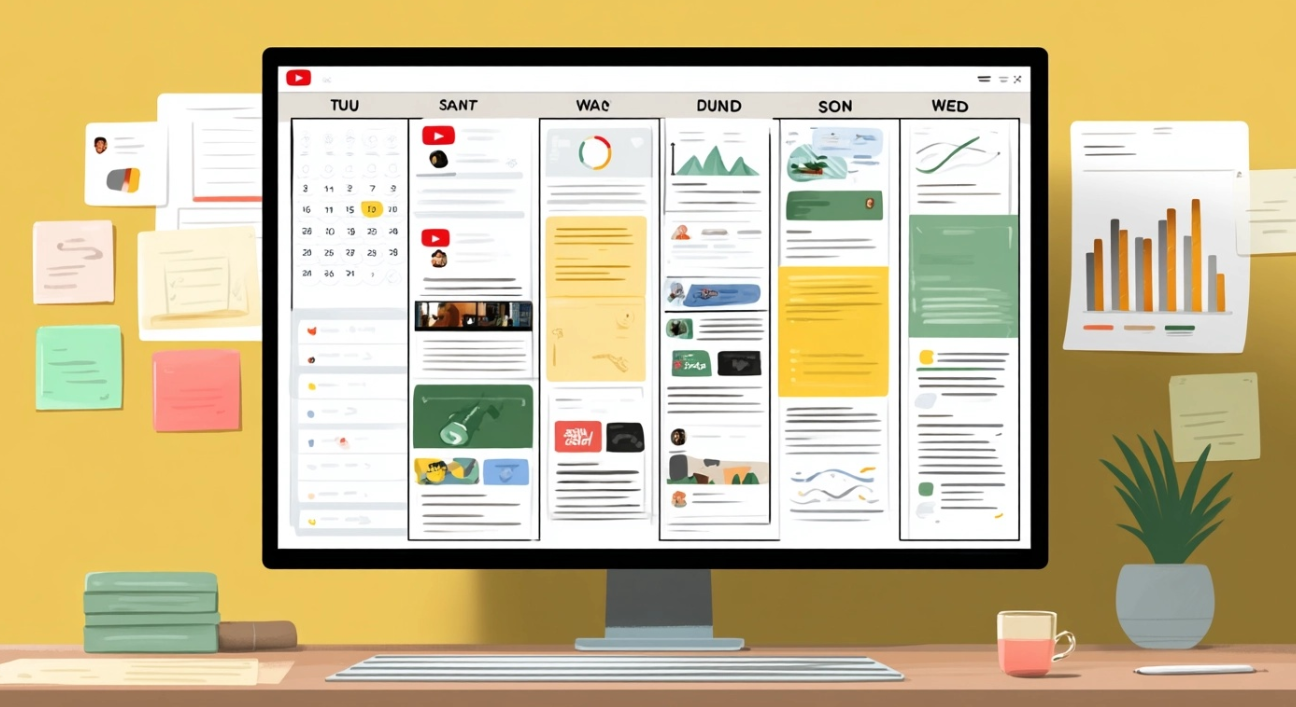
12 week year digital tools

2. Applications (apps & SaaS)

What this category is

Software that supports execution—but does not embody the system itself.

These tools typically handle:

  • tasks

  • reminders

  • calendars

  • tracking

Some are marketed specifically for the 12-Week Year.
Most are general-purpose tools adapted to it.


When this works best

Applications are useful when:

  • you want automation

  • reminders help you stay consistent

  • you already live inside apps

  • multiple people are involved

  • They often feel easier at the beginning because setup is fast.

Strengths

  • Low friction to start

  • Automation and reminders

  • Good for recurring actions

  • Familiar interfaces


Limitations

  • Encourage task accumulation

  • Can hide prioritization problems

  • Rarely enforce vision or focus

  • Easy to confuse activity with progress

Important distinction:

An app can manage tasks. It cannot decide what matters.

As part of my research on tools and apps for the 12-Week Year I started to seriously explore how AI can be used. 
See my article The Current State of AI and The 12-Week Year.

If you are interested in diving deeper into the future of the 12-Week Year see How to Future Proof Your Career at the age of AI.


3. Physical planners, notebooks & PDFs

What this category is

Analog or print-based tools used to run the system manually.

This includes:

  • printed planners

  • blank notebooks

  • fillable or printable PDFs

Despite feeling “old-school,” this category is still widely used.


When this works best

Physical tools work particularly well when:

  • digital tools feel distracting

  • simplicity matters more than scale

  • you want stronger focus and reflection

  • you’re new to the system

Many people underestimate how effective analog tools can be.


Strengths

  • High focus

  • Minimal distraction

  • Strong cognitive engagement

  • Forces intentional planning


Limitations

  • No automation

  • Harder to revise or track history

  • Less suited for complex workflows

A useful insight:

Analog tools often outperform digital ones when clarity—not efficiency—is the goal.

For a deeper dive into 12-Week Physical Planners see The Best Physical Planners for the 12-Week Year (Updated for 2026).

physical tools for the 12 week years


How to choose the right type (without overthinking it)

There is no “best” option. There is only fit.

As a rough guide:

  • If flexibility matters → digital templates

  • If automation matters → applications

  • If focus matters → physical tools

Your choice can—and often should—change over time.

What matters is running one full 12-week cycle before switching.


Common tool mistakes to avoid

A few patterns show up again and again:

  • believing the right tool will fix execution

  • switching tools mid-cycle

  • adding tools instead of simplifying

  • mistaking customization for progress

The system breaks not because the tool is wrong—but because it becomes the focus.


The simplest way to start

If you’re unsure:

  • choose one category

  • keep the setup minimal

  • run the system for 12 weeks

  • adjust only after reviewing results

The 12-Week Year rewards consistency, not optimization.

Frequently Asked Questions: Tools for the 12-Week Year

Do I need a special tool to run the 12-Week Year?

No. The system works with many tools—and even without one.


Are digital tools better than physical ones?

Not inherently. Each solves different problems. Focus and clarity often matter more than features.


Can I combine categories?

Yes—but carefully. Mixing too many tools usually increases friction rather than reducing it.


Should I change tools every cycle?

Only if there’s a clear reason. Changing tools too often resets momentum.


Is it okay to start simple?

It’s recommended. Complexity can always be added later. Clarity can’t.


Bottom line

The 12-Week Year doesn’t require the perfect tool.
It requires a tool that stays out of the way.

Understanding the landscape lets you choose intentionally—without getting lost in it.

12-Week Breakthrough

Acheive Peak
Productivity For Life
In 12 Weeks